mirror of https://github.com/tiangolo/fastapi.git
254 lines
5.9 KiB
Markdown
254 lines
5.9 KiB
Markdown
The simplest FastAPI file could look like this:
|
|
|
|
```Python
|
|
{!tutorial/src/first-steps/tutorial001.py!}
|
|
```
|
|
|
|
Copy that to a file `main.py`.
|
|
|
|
Run the live server:
|
|
|
|
```bash
|
|
uvicorn main:app --debug
|
|
```
|
|
|
|
!!! note
|
|
The command `uvicorn main:app` refers to:
|
|
|
|
* `main`: the file `main.py` (the Python "module").
|
|
* `app`: the object created inside of `main.py` with the line `app = FastAPI()`.
|
|
* `--debug`: make the server restart after code changes. Only use for development.
|
|
|
|
You will see an output like:
|
|
|
|
```hl_lines="4"
|
|
INFO: Started reloader process [17961]
|
|
INFO: Started server process [17962]
|
|
INFO: Waiting for application startup.
|
|
INFO: Uvicorn running on http://127.0.0.1:8000 (Press CTRL+C to quit)
|
|
```
|
|
|
|
That last line shows the URL where your app is being served, in your local machine.
|
|
|
|
### Check it
|
|
|
|
Open your browser at <a href="http://127.0.0.1:8000" target="_blank">http://127.0.0.1:8000</a>.
|
|
|
|
You will see the JSON response as:
|
|
|
|
```JSON
|
|
{"hello": "world"}
|
|
```
|
|
|
|
### Interactive API docs
|
|
|
|
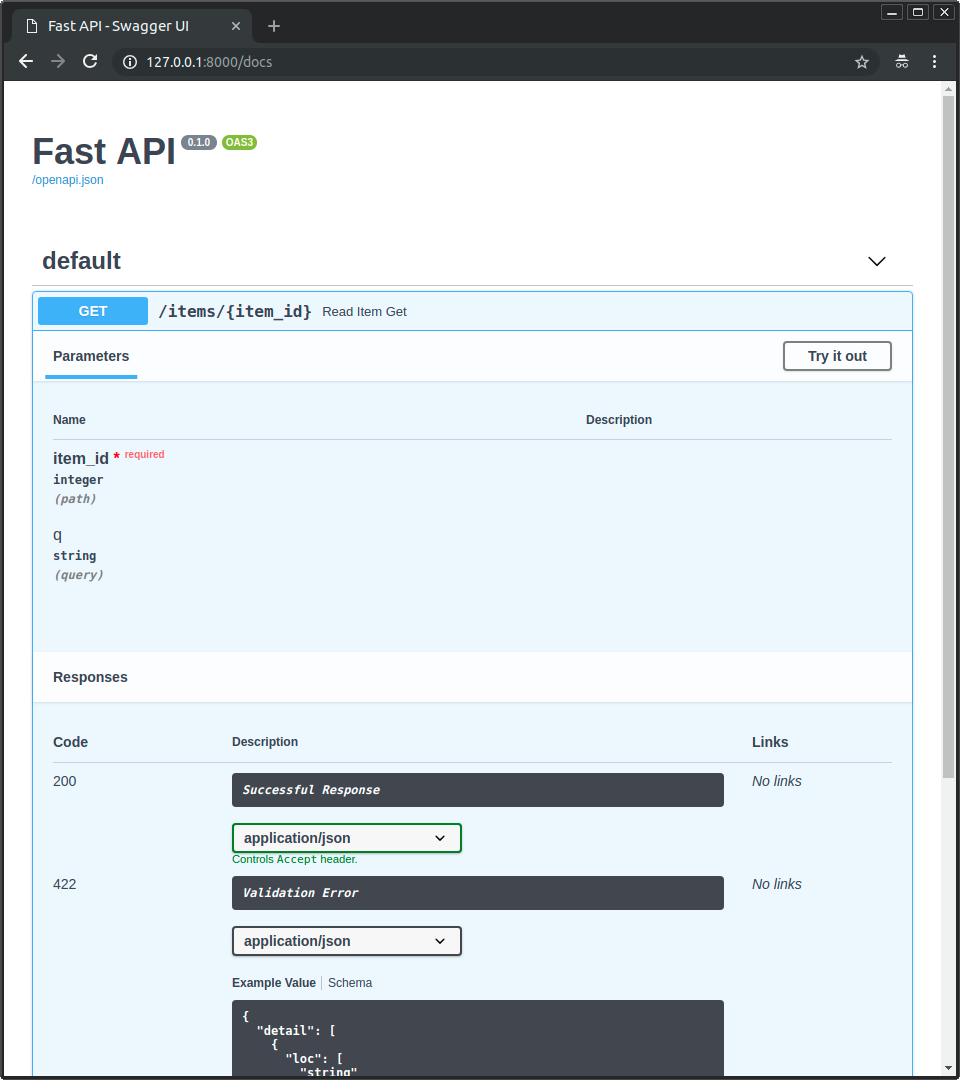
Now go to <a href="http://127.0.0.1:8000/docs" target="_blank">http://127.0.0.1:8000/docs</a>.
|
|
|
|
You will see the automatic interactive API documentation (provided by <a href="https://github.com/swagger-api/swagger-ui" target="_blank">Swagger UI</a>):
|
|
|
|
|
|
|
|
|
|
### Alternative API docs
|
|
|
|
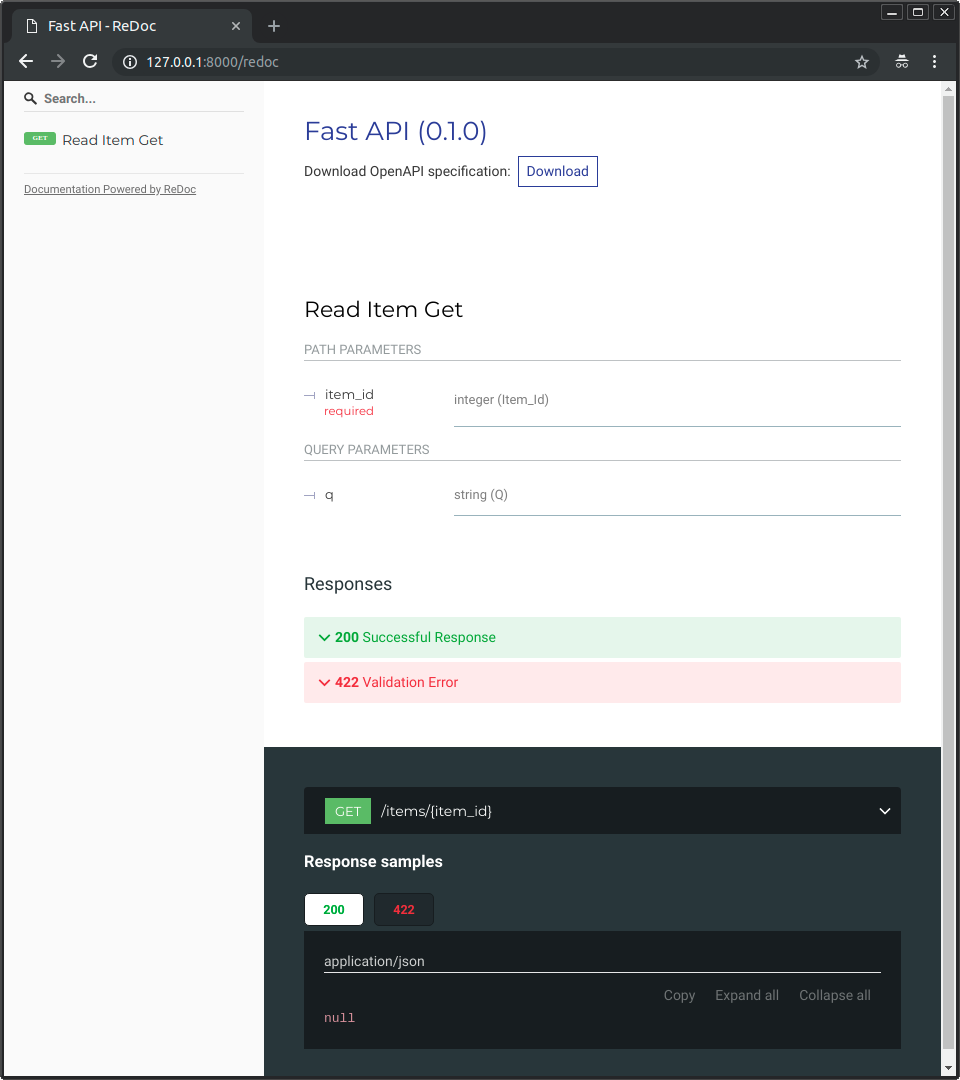
And now, go to <a href="http://127.0.0.1:8000/redoc" target="_blank">http://127.0.0.1:8000/redoc</a>.
|
|
|
|
You will see the alternative automatic documentation (provided by <a href="https://github.com/Rebilly/ReDoc" target="_blank">ReDoc</a>):
|
|
|
|
|
|
|
|
If you are curious about how the raw OpenAPI schema looks like, it is just an automatically generated JSON with the descriptions of all your API.
|
|
|
|
You can see it directly at: <a href="http://127.0.0.1:8000/openapi.json" target="_blank">http://127.0.0.1:8000/openapi.json</a>.
|
|
|
|
It will show a JSON starting with something like:
|
|
|
|
```JSON
|
|
{
|
|
"openapi": "3.0.2",
|
|
"info": {
|
|
"title": "Fast API",
|
|
"version": "0.1.0"
|
|
},
|
|
"paths": {
|
|
"/items/": {
|
|
"get": {
|
|
"responses": {
|
|
"200": {
|
|
"description": "Successful Response",
|
|
"content": {
|
|
"application/json": {
|
|
|
|
|
|
|
|
...
|
|
```
|
|
|
|
## Recap, step by step
|
|
|
|
### Step 1: import `FastAPI`
|
|
|
|
```Python hl_lines="1"
|
|
{!tutorial/src/first-steps/tutorial001.py!}
|
|
```
|
|
|
|
`FastAPI` is a Python class that provides all the functionality for your API.
|
|
|
|
!!! note "Technical Details"
|
|
`FastAPI` is a class that inherits directly from `Starlette`.
|
|
|
|
You can use all the Starlette functionality with `FastAPI` too.
|
|
|
|
### Step 2: create a `FastAPI` "instance"
|
|
|
|
```Python hl_lines="3"
|
|
{!tutorial/src/first-steps/tutorial001.py!}
|
|
```
|
|
|
|
Here the `app` variable will be an "instance" of the class `FastAPI`.
|
|
|
|
This will be the main point of interaction to create all your API.
|
|
|
|
This `app` is the same one referred by `uvicorn` in the command:
|
|
|
|
```bash
|
|
uvicorn main:app --debug
|
|
```
|
|
|
|
If you create your app like:
|
|
|
|
```Python hl_lines="3"
|
|
{!tutorial/src/first-steps/tutorial002.py!}
|
|
```
|
|
|
|
And put it in a file `main.py`, then you would call `uvicorn` like:
|
|
|
|
```bash
|
|
uvicorn main:my_awesome_api --debug
|
|
```
|
|
|
|
### Step 3: create a path operation
|
|
|
|
#### Path
|
|
|
|
"Path" here refers to the last part of the URL starting from the first `/`.
|
|
|
|
So, in a URL like:
|
|
|
|
```
|
|
https://example.com/items/foo
|
|
```
|
|
|
|
...the path would be:
|
|
|
|
```
|
|
/items/foo
|
|
```
|
|
|
|
!!! info
|
|
A "path" is also commonly called an "endpoint" or a "route".
|
|
|
|
Building an API, the "path" is the main way to separate "concerns" and functionalities.
|
|
|
|
#### Operation
|
|
|
|
"Operation" here refers to one of the HTTP "methods".
|
|
|
|
One of:
|
|
|
|
* `POST`
|
|
* `GET`
|
|
* `PUT`
|
|
* `DELETE`
|
|
|
|
...and the more exotic ones:
|
|
|
|
* `OPTIONS`
|
|
* `HEAD`
|
|
* `PATCH`
|
|
* `TRACE`
|
|
|
|
In the HTTP protocol, you can communicate to each path using one (or more) of these "methods".
|
|
|
|
---
|
|
|
|
When building APIs, you normally use these specific HTTP methods to perform a specific operation.
|
|
|
|
Normally you use:
|
|
|
|
* `POST`: to create data.
|
|
* `GET`: to read data.
|
|
* `PUT`: to update data.
|
|
* `DELETE`: to delete data.
|
|
|
|
So, in OpenAPI, each of the HTTP methods is called an "operation".
|
|
|
|
We are going to call them "operations" too.
|
|
|
|
#### Define a path operation function
|
|
|
|
```Python hl_lines="6"
|
|
{!tutorial/src/first-steps/tutorial001.py!}
|
|
```
|
|
|
|
The `@app.get("/")` tells **FastAPI** that the function right below is in charge of handling requests that go to:
|
|
|
|
* the path `/`
|
|
* using a <abbr title="an HTTP GET method"><code>get</code> operation</abbr>
|
|
|
|
You can also use the other operations:
|
|
|
|
* `@app.post()`
|
|
* `@app.put()`
|
|
* `@app.delete()`
|
|
|
|
And the more exotic ones:
|
|
|
|
* `@app.options()`
|
|
* `@app.head()`
|
|
* `@app.patch()`
|
|
* `@app.trace()`
|
|
|
|
!!! tip
|
|
You are free to use each operation (HTTP method) as you wish.
|
|
|
|
**FastAPI** doesn't enforce any specific meaning.
|
|
|
|
The information here is presented as a guideline, not a requirement.
|
|
|
|
For example, when using GraphQL you normally perform all the operations using only `post`.
|
|
|
|
### Step 4: define the path operation function
|
|
|
|
```Python hl_lines="7"
|
|
{!tutorial/src/first-steps/tutorial001.py!}
|
|
```
|
|
|
|
This is a Python function.
|
|
|
|
It will be called by FastAPI whenever it receives a request to the URL "`/`".
|
|
|
|
In this case, it is an `async` function.
|
|
|
|
---
|
|
|
|
You could also define it as a normal function instead of `async def`:
|
|
|
|
```Python hl_lines="7"
|
|
{!tutorial/src/first-steps/tutorial003.py!}
|
|
```
|
|
|
|
To know the difference, read the section about [Concurrency and `async` / `await`](/async/).
|
|
|
|
### Step 5: return the content
|
|
|
|
```Python hl_lines="8"
|
|
{!tutorial/src/first-steps/tutorial001.py!}
|
|
```
|
|
|
|
You can return a `dict`, `list`, singular values as `str`, `int`, etc.
|
|
|
|
You can also return Pydantic models (you'll see more about that later).
|
|
|
|
There are many other objects and models that will be automatically converted to JSON.
|