mirror of https://github.com/tiangolo/fastapi.git
340 lines
12 KiB
Markdown
340 lines
12 KiB
Markdown
<p align="center">
|
|
<a href="https://fastapi.tiangolo.com"><img src="https://fastapi.tiangolo.com/img/logo-margin/logo-teal-vector.svg" alt='FastAPI'></a>
|
|
</p>
|
|
<p align="center">
|
|
<em>FastAPI framework, high performance, easy to learn, fast to code, ready for production</em>
|
|
</p>
|
|
<p align="center">
|
|
<a href="https://travis-ci.org/tiangolo/fastapi" target="_blank">
|
|
<img src="https://travis-ci.org/tiangolo/fastapi.svg?branch=master" alt="Build Status">
|
|
</a>
|
|
<a href="https://codecov.io/gh/tiangolo/fastapi" target="_blank">
|
|
<img src="https://codecov.io/gh/tiangolo/fastapi/branch/master/graph/badge.svg" alt="Coverage">
|
|
</a>
|
|
<a href="https://pypi.org/project/fastapi" target="_blank">
|
|
<img src="https://badge.fury.io/py/fastapi.svg" alt="Package version">
|
|
</a>
|
|
</p>
|
|
|
|
---
|
|
|
|
**Documentation**: <a href="https://fastapi.tiangolo.com" target="_blank">https://fastapi.tiangolo.com</a>
|
|
|
|
**Source Code**: <a href="https://github.com/tiangolo/fastapi" target="_blank">https://github.com/tiangolo/fastapi</a>
|
|
|
|
---
|
|
|
|
FastAPI is a modern, fast (high-performance), web framework for building APIs with Python 3.6+.
|
|
|
|
The key features are:
|
|
|
|
* **Fast**: Very high performance, on par with **NodeJS** and **Go** (thanks to Starlette and Pydantic).
|
|
|
|
* **Fast to code**: Increase the speed to develop features by about 200% to 300% *.
|
|
* **Less bugs**: Reduce about 40% of human (developer) induced errors. *
|
|
* **Intuitive**: Great editor support. <abbr title="also known as auto-complete, autocompletion, IntelliSense">Completion</abbr> everywhere. Less time debugging.
|
|
* **Easy**: Designed to be easy to use and learn. Less time reading docs.
|
|
* **Short**: Minimize code duplication. Multiple features from each parameter declaration. Less bugs.
|
|
* **Robust**: Get production-ready code. With automatic interactive documentation.
|
|
* **Standards-based**: Based on (and fully compatible with) the open standards for APIs: <a href="https://github.com/OAI/OpenAPI-Specification" target="_blank">OpenAPI</a> and <a href="http://json-schema.org/" target="_blank">JSON Schema</a>.
|
|
|
|
<small>* estimation based on tests on an internal development team, building production applications.</small>
|
|
|
|
|
|
## Requirements
|
|
|
|
Python 3.6+
|
|
|
|
FastAPI stands on the shoulders of giants:
|
|
|
|
* <a href="https://www.starlette.io/" target="_blank">Starlette</a> for the web parts.
|
|
* <a href="https://pydantic-docs.helpmanual.io/" target="_blank">Pydantic</a> for the data parts.
|
|
|
|
|
|
## Installation
|
|
|
|
```bash
|
|
$ pip install fastapi
|
|
```
|
|
|
|
You will also need an ASGI server, for production such as <a href="http://www.uvicorn.org" target="_blank">uvicorn</a>.
|
|
|
|
```bash
|
|
$ pip install uvicorn
|
|
```
|
|
|
|
## Example
|
|
|
|
* Create a file `main.py` with:
|
|
|
|
```Python
|
|
from fastapi import FastAPI
|
|
|
|
app = FastAPI()
|
|
|
|
@app.get('/')
|
|
def read_root():
|
|
return {'hello': 'world'}
|
|
```
|
|
|
|
Or if your code uses `async` / `await`, use `async def`:
|
|
|
|
```Python hl_lines="6"
|
|
from fastapi import FastAPI
|
|
|
|
app = FastAPI()
|
|
|
|
@app.get('/')
|
|
async def read_root():
|
|
return {'hello': 'world'}
|
|
```
|
|
|
|
!!! note
|
|
If you don't know, check the _"In a hurry?"_ section about <a href="https://fastapi.tiangolo.com/async/#in-a-hurry" target="_blank">`async` and `await` in the docs</a>.
|
|
|
|
|
|
* Run the server with:
|
|
|
|
```bash
|
|
uvicorn main:app --debug
|
|
```
|
|
|
|
!!! note
|
|
The command `uvicorn main:app` refers to:
|
|
|
|
* `main`: the file `main.py` (the Python "module").
|
|
* `app`: the object created inside of `main.py` with the line `app = FastAPI()`.
|
|
* `--debug`: make the server restart after code changes. Only do this for development.
|
|
|
|
### Check it
|
|
|
|
Open your browser at <a href="http://127.0.0.1:8000" target="_blank">http://127.0.0.1:8000</a>.
|
|
|
|
You will see the JSON response as:
|
|
|
|
```JSON
|
|
{"hello": "world"}
|
|
```
|
|
|
|
### Interactive API docs
|
|
|
|
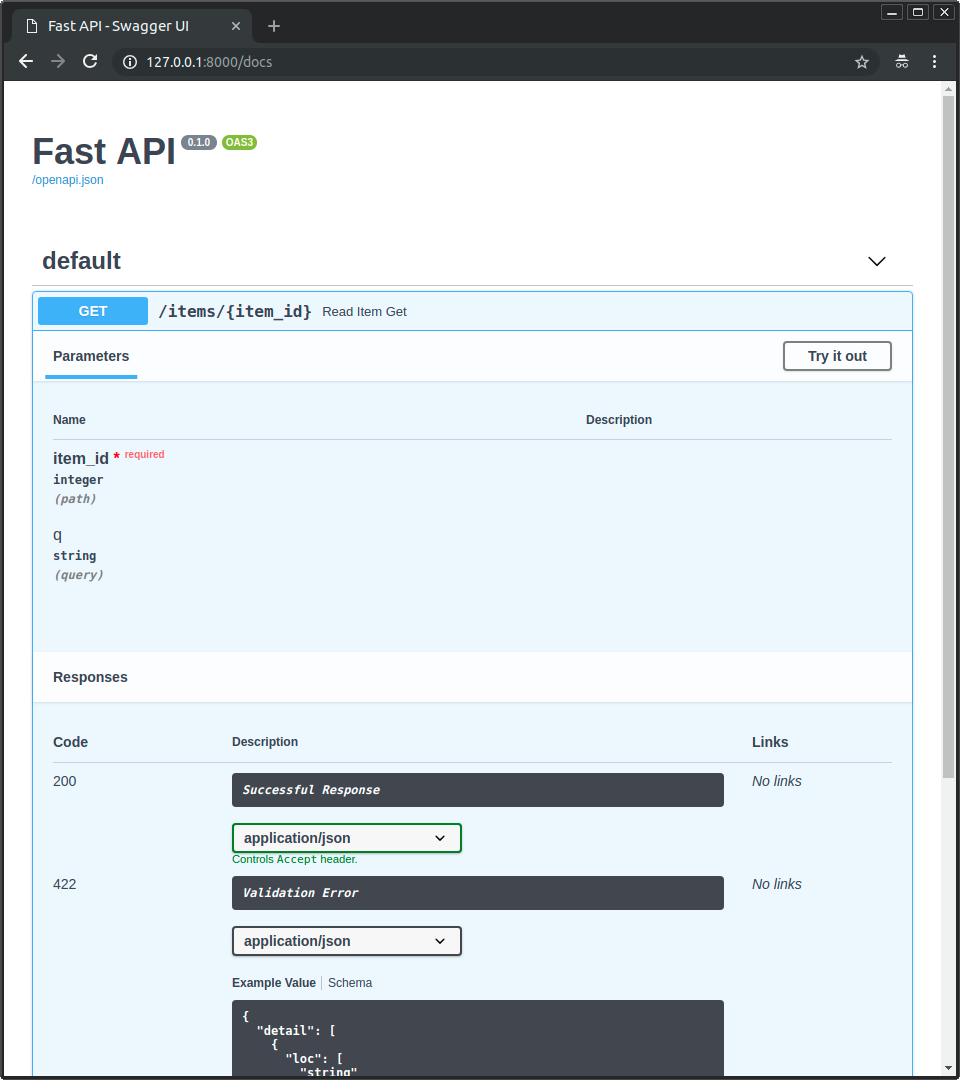
Now go to <a href="http://127.0.0.1:8000/docs" target="_blank">http://127.0.0.1:8000/docs</a>.
|
|
|
|
You will see the automatic interactive API documentation (provided by <a href="https://github.com/swagger-api/swagger-ui" target="_blank">Swagger UI</a>):
|
|
|
|
|
|
|
|
|
|
### Alternative API docs
|
|
|
|
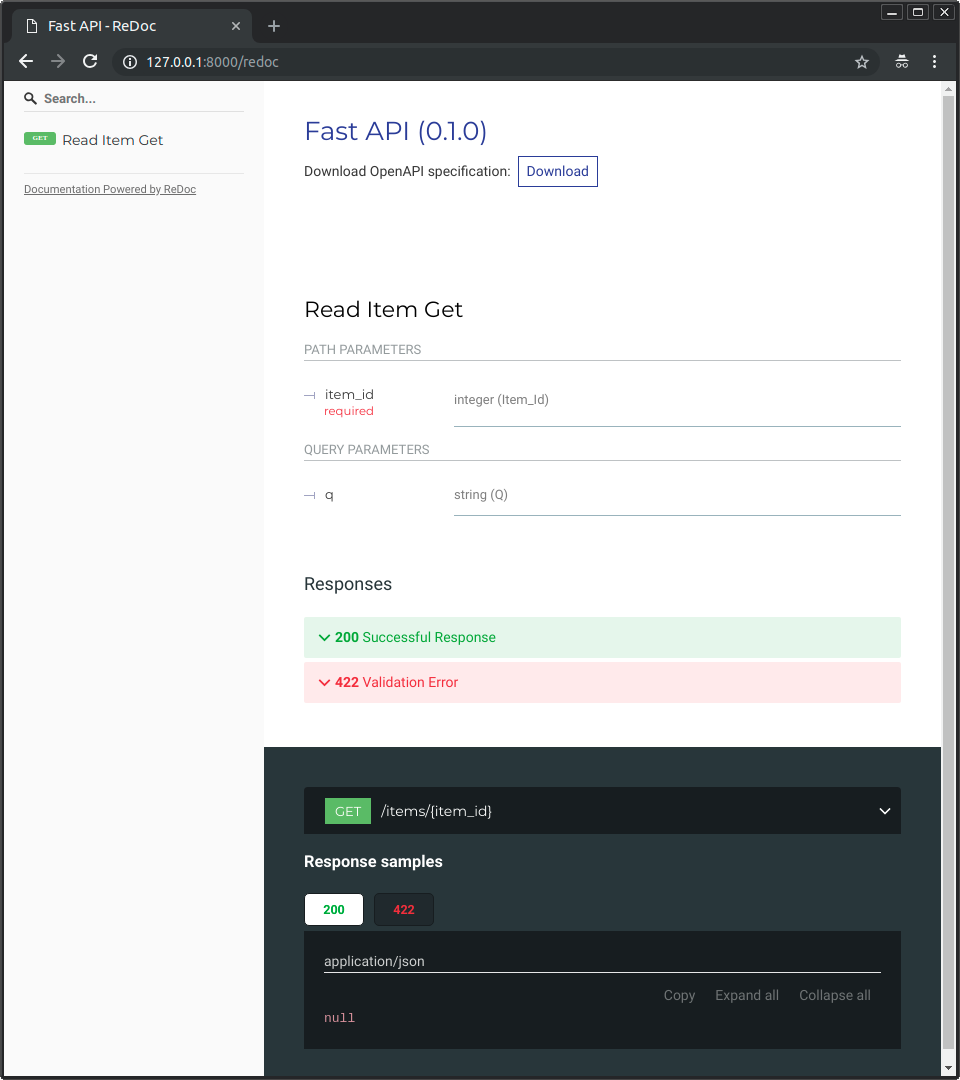
And now, go to <a href="http://127.0.0.1:8000/redoc" target="_blank">http://127.0.0.1:8000/redoc</a>.
|
|
|
|
You will see the alternative automatic documentation (provided by <a href="https://github.com/Rebilly/ReDoc" target="_blank">ReDoc</a>):
|
|
|
|
|
|
|
|
## Example upgrade
|
|
|
|
Now modify the file `main.py` to include:
|
|
|
|
* a path parameter `item_id`.
|
|
* a body, declared using standard Python types (thanks to Pydantic).
|
|
* an optional query parameter `q`.
|
|
|
|
|
|
```Python hl_lines="2 7 8 9 10 19"
|
|
from fastapi import FastAPI
|
|
from pydantic import BaseModel
|
|
|
|
app = FastAPI()
|
|
|
|
|
|
class Item(BaseModel):
|
|
name: str
|
|
price: float
|
|
is_offer: bool = None
|
|
|
|
|
|
@app.get('/')
|
|
async def read_root():
|
|
return {'hello': 'world'}
|
|
|
|
|
|
@app.post('/items/{item_id}')
|
|
async def create_item(item_id: int, item: Item, q: str = None):
|
|
return {"item_name": item.name, "item_id": item_id, "query": q}
|
|
```
|
|
|
|
The server should reload automatically (because you added `--debug` to the `uvicorn` command above).
|
|
|
|
### Interactive API docs upgrade
|
|
|
|
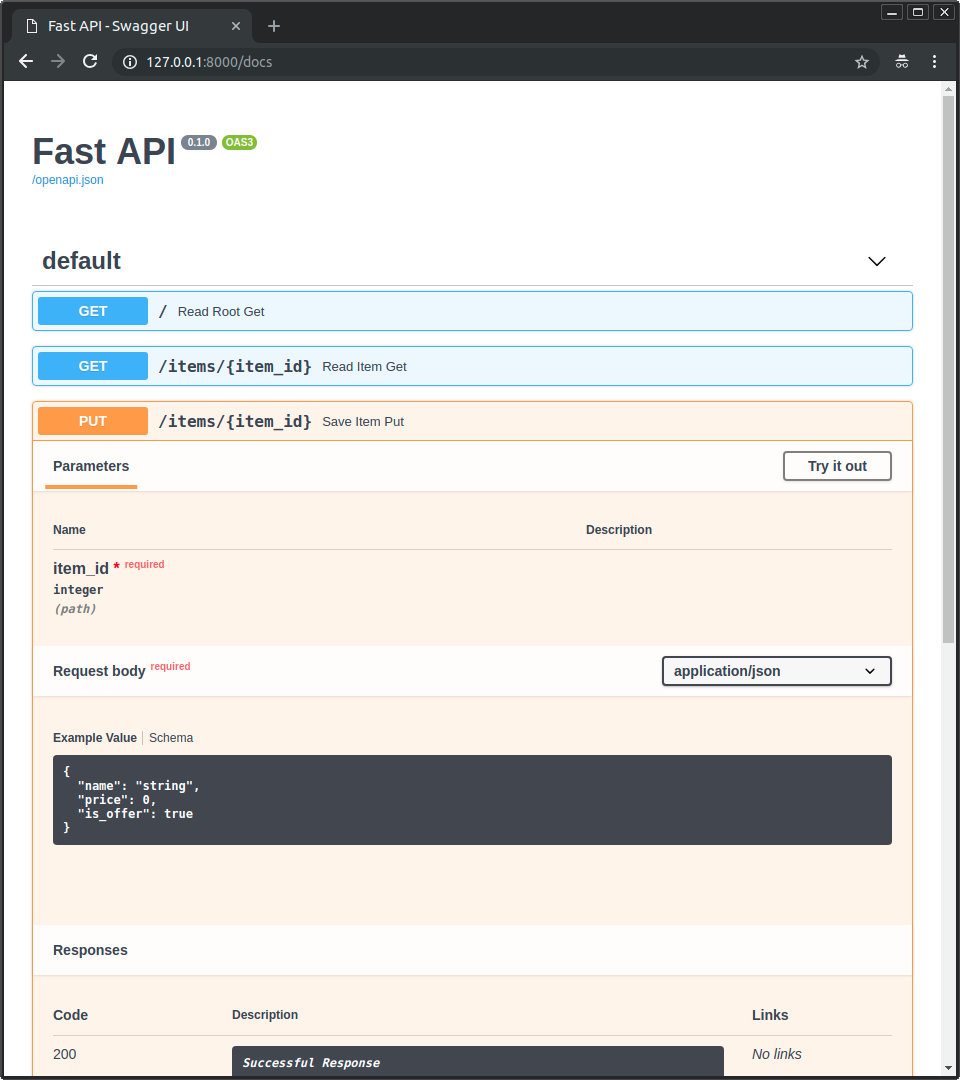
Now go to <a href="http://127.0.0.1:8000/docs" target="_blank">http://127.0.0.1:8000/docs</a>.
|
|
|
|
* The interactive API documentation will be automatically updated, including the new query, and body:
|
|
|
|
|
|
|
|
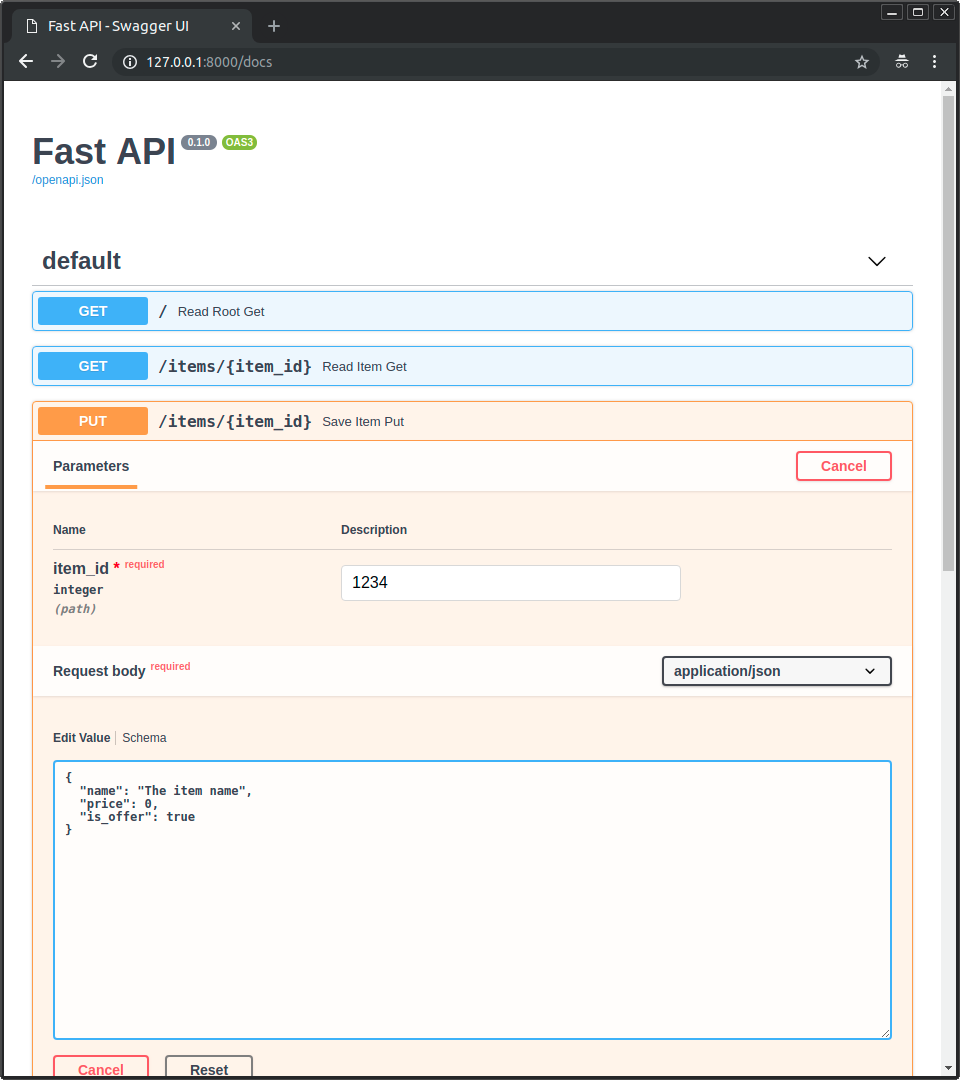
* Click on the button "Try it out", it allows you to fill the parameters and directly interact with the API:
|
|
|
|
|
|
|
|
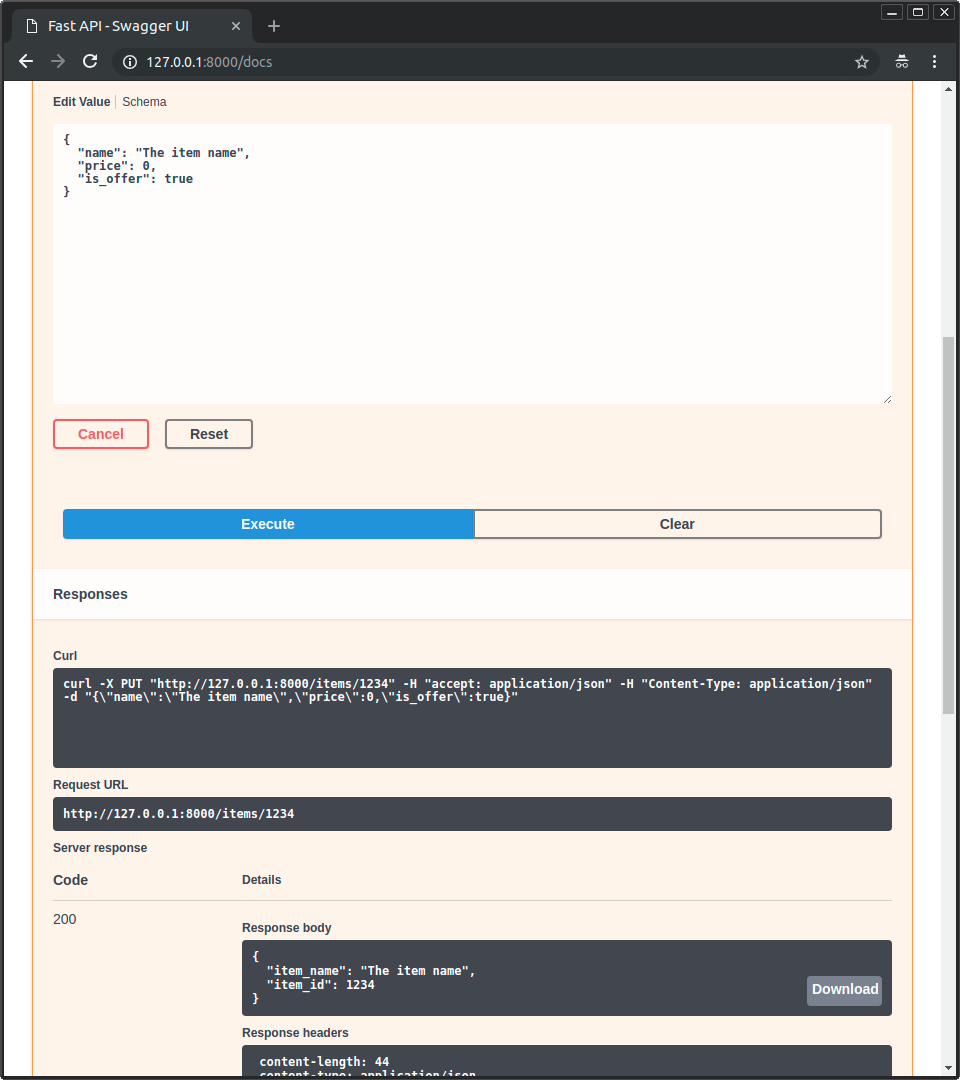
* Then click on the "Execute" button, the user interface will communicate with your API, send the parameters, get the results and show them on the screen:
|
|
|
|
|
|
|
|
|
|
### Alternative API docs upgrade
|
|
|
|
And now, go to <a href="http://127.0.0.1:8000/redoc" target="_blank">http://127.0.0.1:8000/redoc</a>.
|
|
|
|
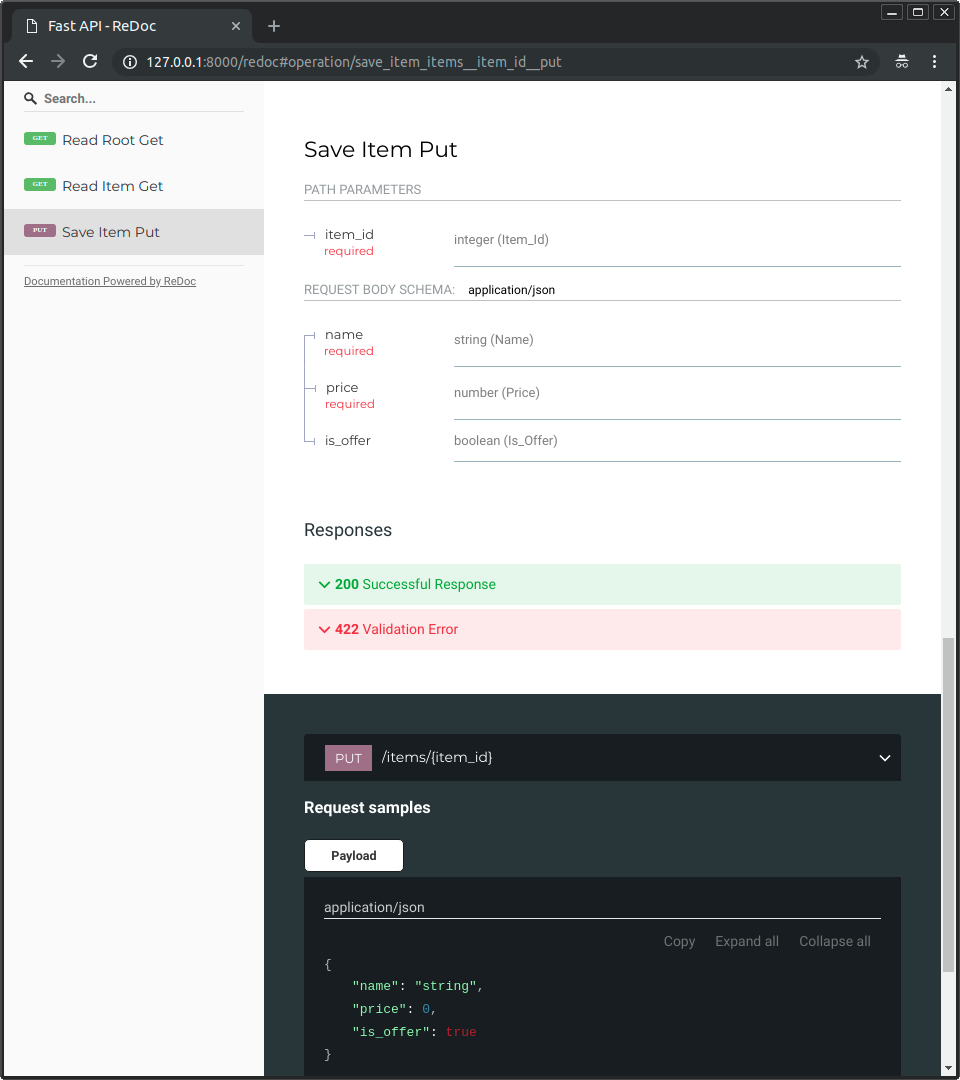
* The alternative documentation will also reflect the new query parameter and body:
|
|
|
|
|
|
|
|
|
|
### Recap
|
|
|
|
In summary, you declare **once** the types of parameters, body, etc. as function parameters.
|
|
|
|
You do that with standard modern Python types.
|
|
|
|
You don't have to learn a new syntax, the methods or classes of a specific library, etc.
|
|
|
|
Just standard **Python 3.6+**.
|
|
|
|
For example, for an `int`:
|
|
|
|
```Python
|
|
item_id: int
|
|
```
|
|
|
|
or for a more complex `Item` model:
|
|
|
|
```Python
|
|
item: Item
|
|
```
|
|
|
|
...and with that single declaration you get:
|
|
|
|
* Editor support, including:
|
|
* Completion.
|
|
* Type checks.
|
|
* Validation of data:
|
|
* Automatic and clear errors when the data is invalid.
|
|
* Validation even for deeply nested JSON objects.
|
|
* <abbr title="also known as: serialization, parsing, marshalling">Conversion</abbr> of input data: coming from the network, to Python data and types. Reading from:
|
|
* JSON.
|
|
* Path parameters.
|
|
* Query parameters.
|
|
* Cookies.
|
|
* Headers.
|
|
* Forms.
|
|
* Files.
|
|
* <abbr title="also known as: serialization, parsing, marshalling">Conversion</abbr> of output data: converting from Python data and types to network data (as JSON):
|
|
* Convert Python types (`str`, `int`, `float`, `bool`, `list`, etc).
|
|
* `datetime` objects.
|
|
* `UUID` objects.
|
|
* Database models.
|
|
* ...and many more.
|
|
* Automatic interactive API documentation, including 2 alternative user interfaces:
|
|
* Swagger UI.
|
|
* ReDoc.
|
|
|
|
---
|
|
|
|
Coming back to the previous code example, **FastAPI** will:
|
|
|
|
* Validate that there is an `item_id` in the path.
|
|
* Validate that the `item_id` is of type `int`.
|
|
* If it is not, the client will see a useful, clear error.
|
|
* Check if there is an optional query parameter named `q` (as in `http://127.0.0.1:8000/items/foo?q=somequery`).
|
|
* As the `q` parameter is declared with `= None`, it is optional.
|
|
* Without the `None` it would be required (as is the body).
|
|
* Read the body as JSON:
|
|
* Check that it has a required attribute `name` that should be a `str`.
|
|
* Check that is has a required attribute `price` that has to be a `float`.
|
|
* Check that it has an optional attribute `is_offer`, that should be a `bool`, if present.
|
|
* All this would also work for deeply nested JSON objects.
|
|
* Convert from and to JSON automatically.
|
|
* Document everything as an OpenAPI schema, that can be used by:
|
|
* Interactive documentation sytems.
|
|
* Automatic client code generation systems, for many languages.
|
|
* Provide 2 interactive documentation web interfaces directly.
|
|
|
|
|
|
---
|
|
|
|
We just scratched the surface, but you already get the idea of how it all works.
|
|
|
|
Try changing the line with:
|
|
|
|
```Python
|
|
return {"item_name": item.name, "item_id": item_id, "query": q}
|
|
```
|
|
|
|
...from:
|
|
|
|
```Python
|
|
... "item_name": item.name ...
|
|
```
|
|
|
|
...to:
|
|
|
|
```Python
|
|
... "item_price": item.price ...
|
|
```
|
|
|
|
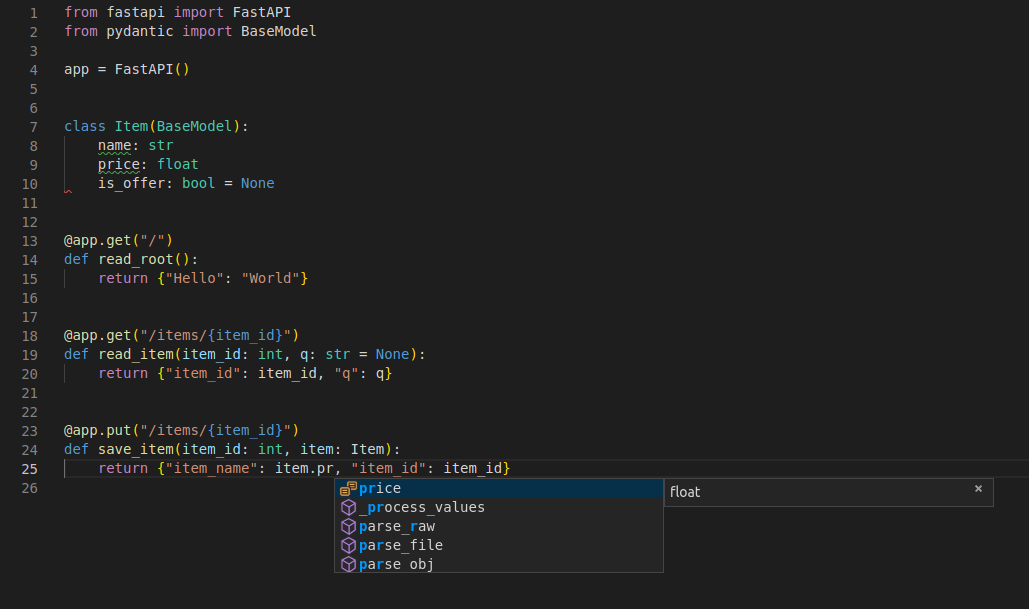
...and see how your editor will auto-complete the attributes and know their types:
|
|
|
|
|
|
|
|
|
|
For a more complete example including more features, see the <a href="https://fastapi.tiangolo.com/tutorial/intro/">Tutorial - User Guide</a>.
|
|
|
|
**Spoiler alert**: the tutorial - user guide includes:
|
|
|
|
* Declaration of **parameters** from other different places as: **headers**, **cookies**, **form fields** and **files**.
|
|
* How to set **validation constrains** as `maximum_length` or `regex`.
|
|
* A very powerful and easy to use **<abbr title="also known as components, resources, providers, services, injectables">Dependency Injection</abbr>** system.
|
|
* Security and authentication, including support for **OAuth2** with **JWT tokens** and **HTTP Basic** auth.
|
|
* More advanced (but equally easy) techniques for declaring **deeply nested JSON models** (thanks to Pydantic).
|
|
* Many extra features (thanks to Starlette) as:
|
|
* **WebSockets**
|
|
* **GraphQL**
|
|
* extremely easy tests based on `requests` and `pytest`
|
|
* **CORS**
|
|
* **Cookie Sessions**
|
|
* ...and more.
|
|
|
|
|
|
|
|
## Optional Dependencies
|
|
|
|
Used by Pydantic:
|
|
|
|
* <a href="https://github.com/esnme/ultrajson" target="_blank"><code>ujson</code></a> - for faster JSON <abbr title="converting the string that comes from an HTTP request into Python data">"parsing"</abbr>.
|
|
* <a href="https://github.com/JoshData/python-email-validator" target="_blank"><code>email_validator</code></a> - for email validation.
|
|
|
|
|
|
Used by Starlette:
|
|
|
|
* <a href="http://docs.python-requests.org" target="_blank"><code>requests</code></a> - Required if you want to use the `TestClient`.
|
|
* <a href="https://github.com/Tinche/aiofiles" target="_blank"><code>aiofiles</code></a> - Required if you want to use `FileResponse` or `StaticFiles`.
|
|
* <a href="http://jinja.pocoo.org" target="_blank"><code>jinja2</code></a> - Required if you want to use the default template configuration.
|
|
* <a href="https://andrew-d.github.io/python-multipart/" target="_blank"><code>python-multipart</code></a> - Required if you want to support form <abbr title="converting the string that comes from an HTTP request into Python data">"parsing"</abbr>, with `request.form()`.
|
|
* <a href="https://pythonhosted.org/itsdangerous/" target="_blank"><code>itsdangerous</code></a> - Required for `SessionMiddleware` support.
|
|
* <a href="https://pyyaml.org/wiki/PyYAMLDocumentation" target="_blank"><code>pyyaml</code></a> - Required for `SchemaGenerator` support.
|
|
* <a href="https://graphene-python.org/" target="_blank"><code>graphene</code></a> - Required for `GraphQLApp` support.
|
|
* <a href="https://github.com/esnme/ultrajson" target="_blank"><code>ujson</code></a> - Required if you want to use `UJSONResponse`.
|
|
|
|
Used by FastAPI / Starlette:
|
|
|
|
* <a href="http://www.uvicorn.org" target="_blank"><code>uvicorn</code></a> - for the server that loads and serves your application.
|
|
|
|
You can install all of these with `pip3 install fastapi[full]`.
|
|
|
|
## License
|
|
|
|
This project is licensed under the terms of the MIT license.
|